Common forms to specify
- Fresh mature-green fingers, hands or bunches.
- Fresh ripe/yellow fruit for cooked uses.
- Dried plantain, chips or flour only where separately specified and confirmed.

Fresh produce / BUYER-LED SOURCING · NIGERIAN COMPANY
Source by requestPlantains are cooking bananas commonly used at mature-green or fully yellow stages. Public references describe boiling, chopping, pounding, frying, toasting and drying, as well as processed chips and flour. The buyer should specify maturity, cultivar, size, condition and transit needs before supply is assessed.
Source by request. Product form, quality requirements, origin, packaging and lot availability are confirmed for your enquiry.
Enquire about plantains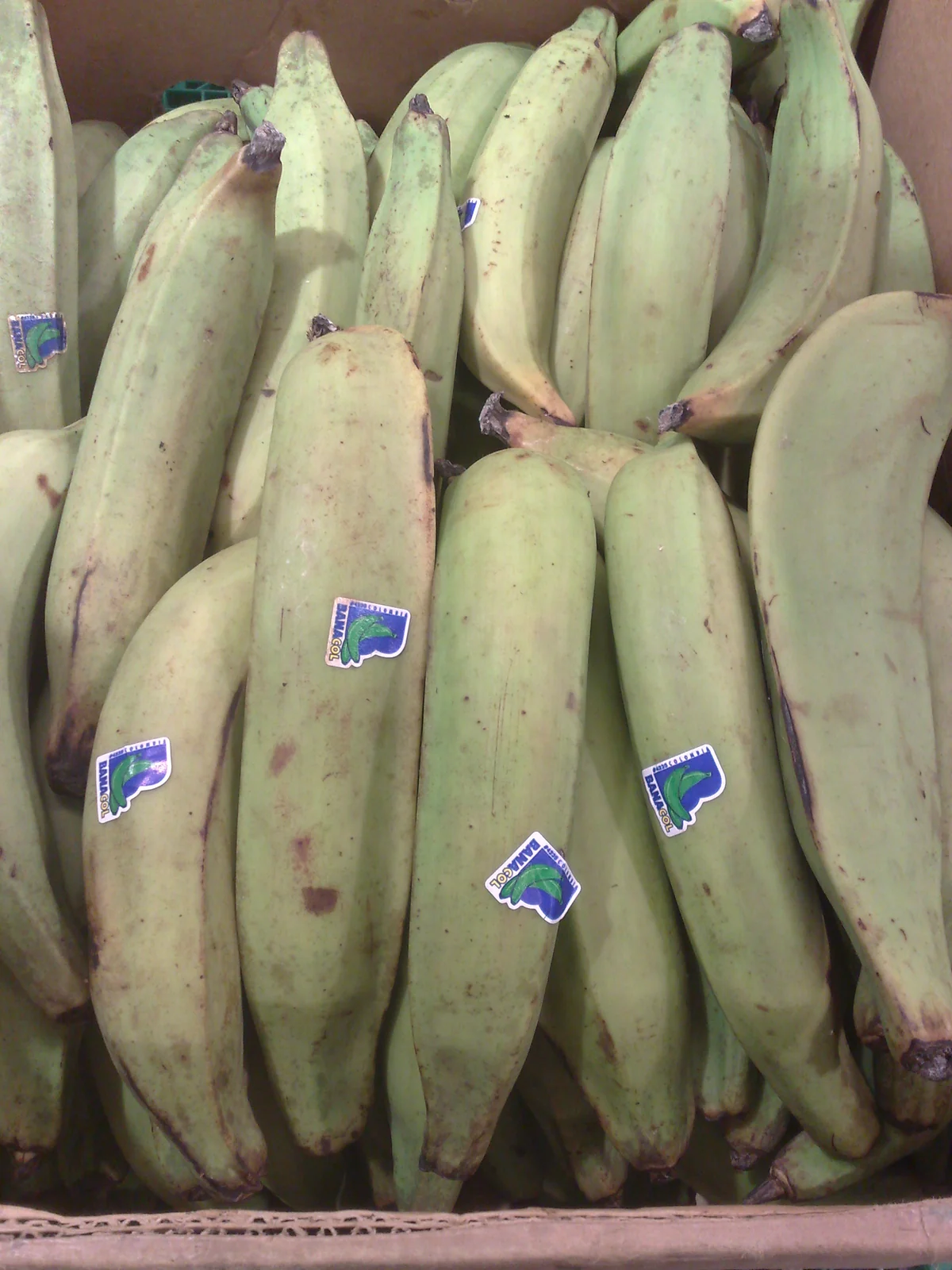
A buyer-led supply brief
State the maturity stage and intended use, then agree the appearance and handling criteria for the destination.
Plantains are listed for source-by-request enquiries. No variety, harvest access, shipment, cold-chain route or current stock is confirmed; maturity and transit are assessed for each order.
Define the right supply
Use these points to frame an enquiry. They are questions for your specific lot, not claims that a current lot or test result has been verified.
Pack, protect & present
Limit bruising and compression and agree maturity at loading.
Agree hand/bunch configuration, ventilation, protection from abrasion, transit timing and any temperature plan. Public UC Davis guidance gives storage ranges that depend on cultivar, maturity and duration; those are general references, not a confirmed Agronex cold-chain route.
Before a quote is accepted
Quality evidence, tied to the lot
Testing scope, sampling and documentation are agreed against the buyer’s requirements for each proposed supply. Ask whether current, verifiable documents are available for the sample or lot under discussion.
Any reviewed report should correspond to the identified sample or supply lot and the agreed testing scope.
These references inform the general product context and buyer-check prompts. They do not certify Agronex, verify a current lot or substitute for buyer due diligence.
Continue exploring
LET’S FIND COMMON GROUND
Tell us what you’re looking for.
Let’s explore what we can build together.